Belphegor
Summary
Belphegor (also Baal-Peor, Belphegor) is the demon prince of Sloth (Acedia) in the hierarchy of the Seven Deadly Sins. Originally a Moabite god of licentiousness, Belphegor now provides easy options and effortless spiritual growth, draining all that was good from the person until only an empty shell remains.
Deadly Sin Association
| Attribute | Value |
|---|---|
| Sin | Sloth (Acedia) |
| Opposite Virtue | Diligence (Industria) |
| Planet | Moon |
| Zodiac | Gemini/Virgo |
| Color | Light Blue/White |
| Element | Water |
Etymology
- Baal-Peor: "Lord Baal of Mt. Phegor"
- "Lord of opening"
- Originally a Moabite deity
- Hebrew: בַּעַל פְּעוֹר (Baal Pe'or)
Biblical References
Numbers 25:1-3
- Israelites "began to play the harlot with the daughters of Moab"
- They "joined themselves to Baal of Peor"
- God's anger was kindled against Israel
- Baal-Peor associated with sexual licentiousness
Hosea 9:10
- "They came to Baal-Peor and consecrated themselves to shame"
- Israel "became as detestable as that which they loved"
The Sin of Sloth
Sloth (Acedia) encompasses:
- Apathy and indifference
- Idleness and laziness
- Cowardice and irresponsibility
- Wastefulness of time
- Avoidance of physical or spiritual work
- Tepidity - lack of spiritual fervor
Dante: "Sloth is the failure to love God with all one's heart, all one's mind and all one's soul."
Hierarchy Position
In Peter Binsfeld's classification of demons (1589):
| Demon | Sin | Planet |
|---|---|---|
| Lucifer | Pride | Sun |
| Mammon | Greed | Saturn |
| Asmodeus | Lust | Venus |
| Satan | Wrath | Mars |
| Beelzebub | Gluttony | Jupiter |
| Leviathan | Envy | Mercury |
| Belphegor | Sloth | Moon |
Characteristics
Methods of Operation
According to tradition:
- Provides those who prefer the easy option
- Grants ingenious inventions for wealth with minimal effort
- Offers a life too easy
- Promises effortless spiritual growth
- Drains like juice from a juice-box all that was once good
- Leaves only an empty shell
Appearance
- When invoked, appears in the form of a young woman
- This contrasts with his original male form as Baal-Peor
In Hell
- Demon of discoveries and ingenious inventions
- Special envoy/ambassador to France (according to De Plancy)
- Accredited to Paris (confirmed by Victor Hugo)
The Gurdjieff Connection
Georges I. Gurdjieff's teaching on "food for the Moon":
"The moon is man's big enemy. We serve the moon. ... We are like the moon's sheep, which it cleans, feeds and shears, and keeps for its own purposes. But when it is hungry it kills a lot of them. All organic life works for the moon."
Key Concepts
- Kundabuffer: The moon's representative on earth
- Buffers of wishful thinking: Mechanism of sloth
- Humans as "moon's sheep"
- Vibrations from intense human experience feed the moon
- Violent death generates particularly potent "food"
In Cabalistic Tradition
- Once an angel of the order of Principalities
- Fell from grace
- Now serves as a chief demon
Planetary Associations
Moon attributes:
- Rules: emotions, habits, the subconscious
- Day: Monday (dies Lunae)
- Metal: Silver
- Phase connection: Cycles and rhythms
- Associated with: passivity, reflection, dreams
Cross-Cultural Parallels
| Tradition | Entity | Domain |
|---|---|---|
| Moabite | Baal-Peor | Licentiousness |
| Greek | Priapus | Identified with Belphegor |
| Hindu | Rutrem | Erection/phallus deity |
| Christianity | Belphegor | Sloth |
Associated Elite Families
Belphegor's influence manifests through families offering "easy" solutions:
| Family | Domain | Manifestation |
|---|---|---|
| Rockefeller Family | Oil/Industry | Industrialized greed as ritual sacrifice, medical monopolies |
The Rockefeller Connection
- Oil monopolies provide "easy" energy
- Medical system offers "effortless" health through pills
- Foundations provide "easy" solutions to social problems
- Standard Oil's satanic pentagram logo
- "Lackeys" in the hierarchy - power without true occult authority
Industrialized Sacrifice
The Belphegor principle manifests through:
- Technology that eliminates human effort (and purpose)
- Medical industry promising easy health without discipline
- Entertainment and comfort inducing spiritual sleep
- Wealth without work draining the soul
The Nature of Acedia
Originally a monastic term:
- "Noonday demon" of the desert fathers
- Spiritual listlessness and torpor
- Rejection of divine call
- Despair masked as indifference
- The "unforgivable sin" of rejecting grace
Milton's Reference
Paradise Lost VI, 447:
- Milton identifies Belphegor with Nisroc
- "Of Principalities the prime"
Symbolism
- Animal: None specific (sometimes associated with ass)
- Form: Young woman when invoked
- Former Order: Principalities
- Color: Light blue, white
- Direction: Northwest
Psychological Interpretation
Belphegor represents:
- The temptation of the path of least resistance
- Spiritual bypassing
- Depression masked as laziness
- Avoidance of necessary struggle
- The entropy that dissolves structure
Protection and Countermeasures
The virtue opposing Sloth is Diligence (Industria):
- Develop iron-strong strength of mind
- Cultivate robust internal desire for altruistic deeds
- Embrace necessary struggle and effort
- Break the natural flow of give-and-take with action
- Practice discipline and consistent effort
- Recognize "easy" solutions as traps
References
- Ralf Maucher - Archons - Hidden Rulers Through The Ages
- Peter Binsfeld - Classification of Demons (1589)
- Collin de Plancy - Dictionnaire Infernal
- G.I. Gurdjieff - Views from the Real World
- Gustav Davidson - Dictionary of Angels
- John Milton - Paradise Lost
Related Media 1
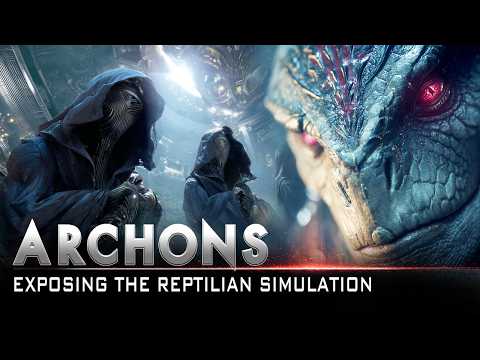
The Gnostic Code - How the Archons Hijacked Reality
Examination of Archon theory and how interdimensional entities allegedly hijacked human perception of reality